
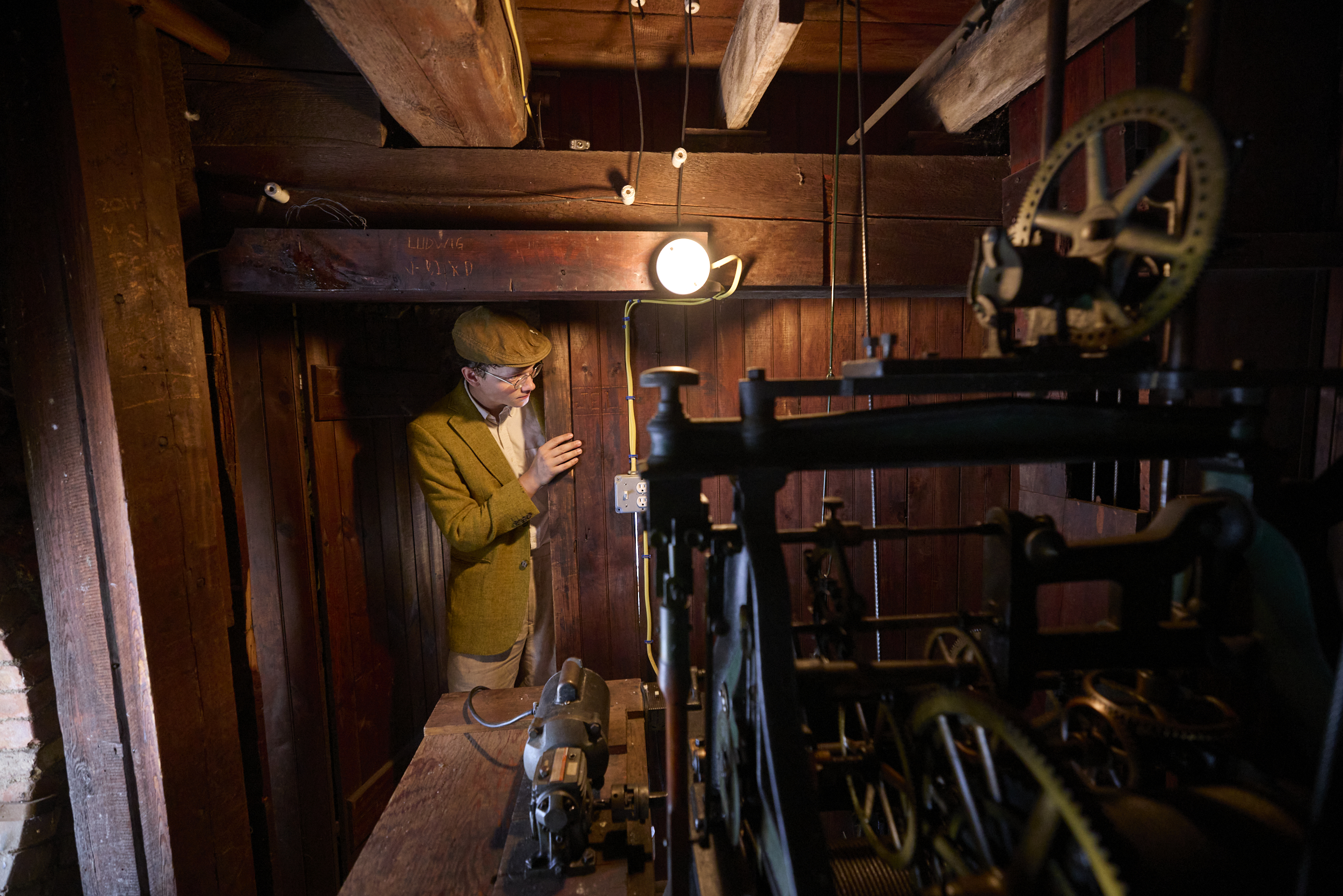
I quit my job to start this magazine. More accurately, I quit my jobs. Less dramatically, I jettisoned many of the side hustles and mercurial freelance gigs that I somehow quilted together to pay my rent.
I poured pints at Spotty Dog. I filled in as a deckhand on the Hudson Ferry. I played piano at strangers’ weddings. I lived from story to story as a freelance reporter, covering town boards and writing album reviews. I’ve cut back on those things to start the magazine you’re now reading.
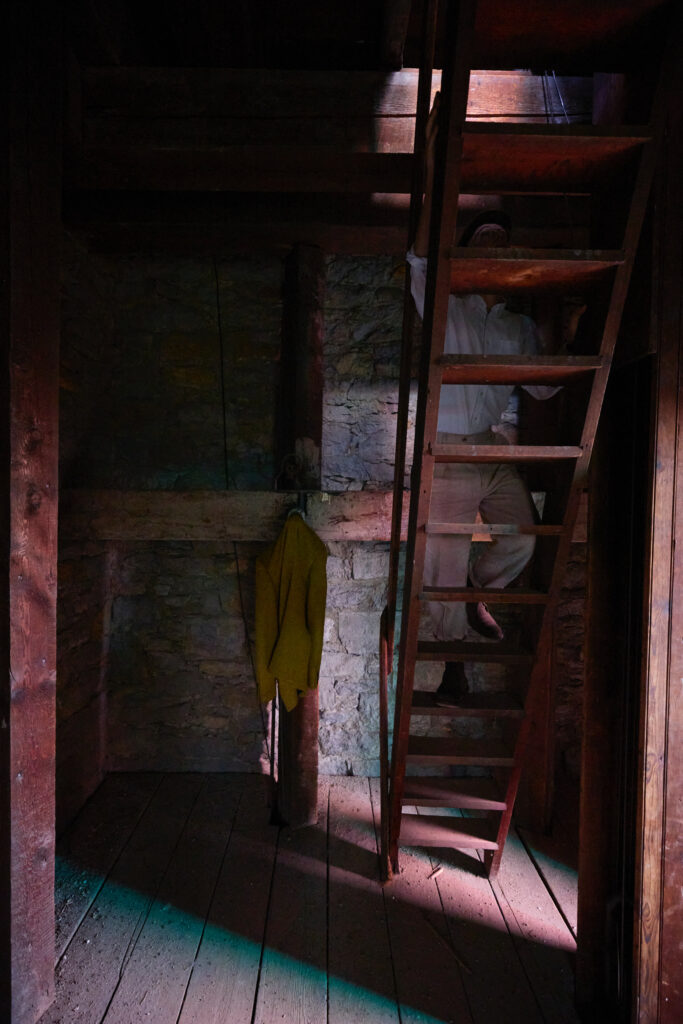
But there’s one job I didn’t quit, one that pays no money, and is probably exposing me to ancient dust mites making permanent homes in my lungs: I wind the clock — the one in the steeple of the First Presbyterian Church on the corner of 4th and Warren.
Once a week, I shimmy behind the organ pipes, duck under the wooden girders, and climb three birdshit covered ladders. I ascend the spire, rising above the rooftops of Hudson. The rungs of the ladder bow under my weight. The wind whistles through the gaps in the walls, and a little pallid light diffuses through the frosted glass. On the dusty banisters and creaking beams are etched the names of the people, some long dead, who once had this gig. C.H. Bronk, 1893. Frank Lasher, 1937. Van Alstyne 1952.
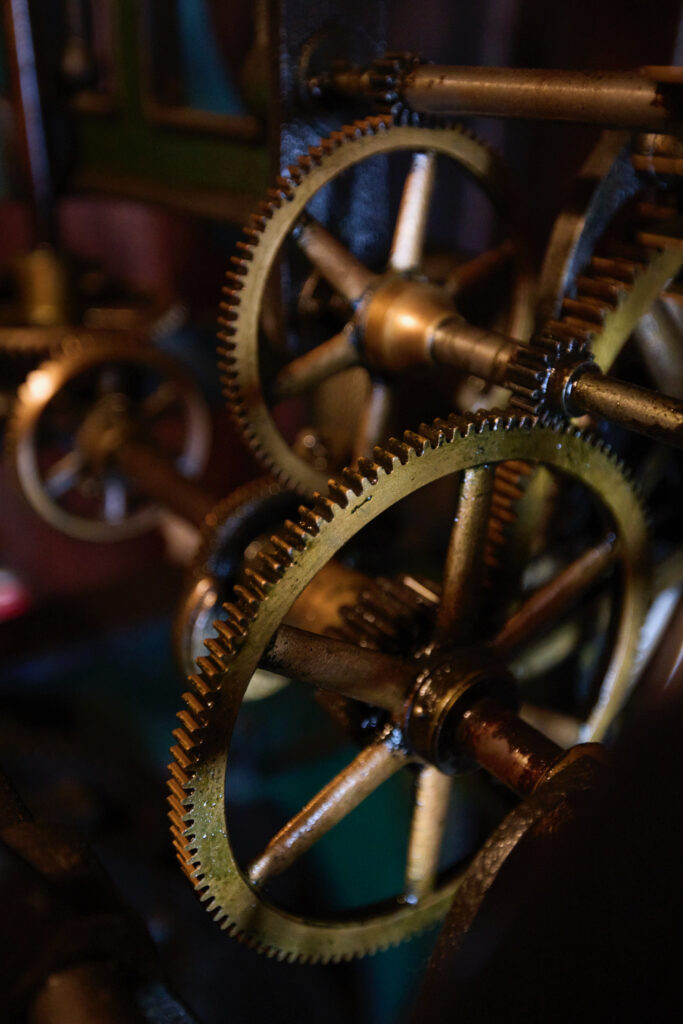
After the ascent I reach the clock. It’s the size of a small car. Dozens of interlocking cogs turn rods that spider out to the four clockfaces seen from the street. A great pendulum descends through the floors, the entire length of the spire — that’s the second hand, suspended from the clock mechanism by a thin wisp of metal. The silent turning of the cogs is powered by a colossal set of weights that drift down the spire over the course of a week. One floor up, above the clock, is the bell. Another set of weights yanks back the hammer as it clangs out the hour. It sounds out the time, and the weights drop down a bit more.
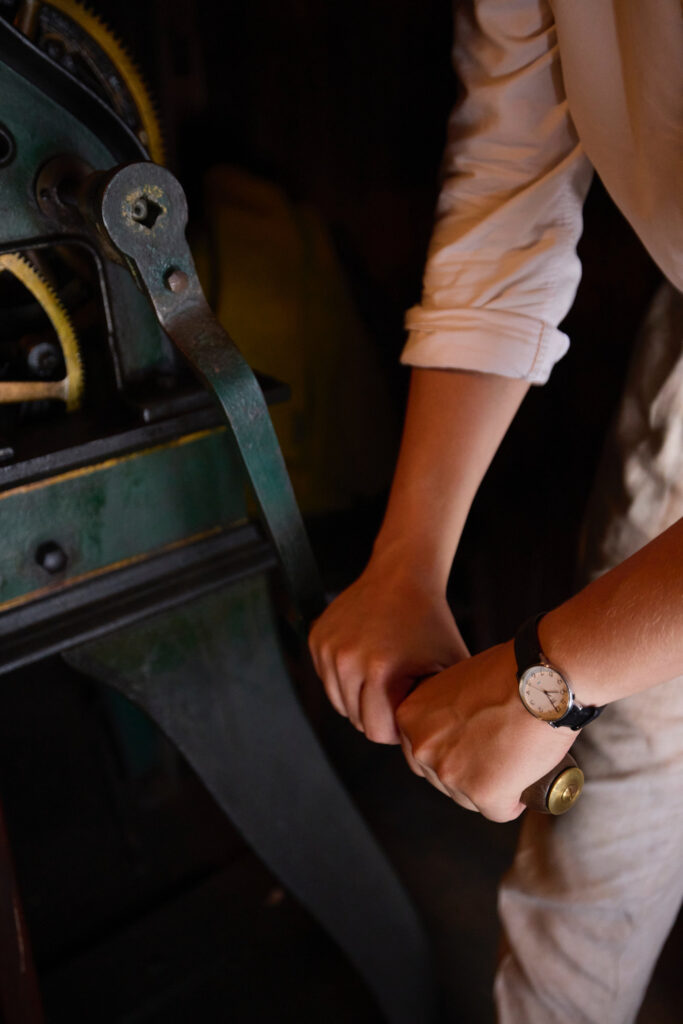
I wish I could tell you how the machine works, what each specific cog does, how the hammer knows to strike on the hour, every hour, how they even lifted this multi-ton machine up so high one hundred years ago. To me, the mechanism is like an elder, omniscient mech-god. It simply knows.
All I know is that if I don’t set aside 15 minutes every Thursday to hoist up the weights, they will descend until there is no more metal coil on the spool, and the hands of the clockfaces will freeze, and I’ll miss the sound of the chime that rings out all over town.
I can hear it from my room. When it’s 4 in the morning and I’ve messed up my sleep schedule again, it urges me to reconsider my choices with its tolling. When I’ve been good and I’m up at 6, standing with a coffee at the window, overlooking the street in the gentle morning light, it cheers for me with its chimes.
I don’t want to let go of this job. It’s my midweek meditation — a reminder that everything changes. People are moving in and moving out. We take on new jobs, leave others. Buildings come down and are put up. Friends come and go. Great art is made and given up on. The only thing constant is that hourly chime. I willingly toil at the crank to keep it clanging, even if I develop a severe dust allergy. I’ve etched my initials into a beam inside the spire.
So too is the mission of The Hudson Observer. This magazine is a way to rise above the rooftops, in order to have our heads slightly closer to the clouds; to act as a literary witness, marking in time moments, communities, lives, and creativity before they tick on. It’s a way to etch our names into the banister of the city to prove, even just to ourselves, that we really were here.
— Tristan Geary, founder and editor, The Hudson Observer
photography by Shannon Greer