
Letting go of the material world at Free Columbia.
by Tristan Geary
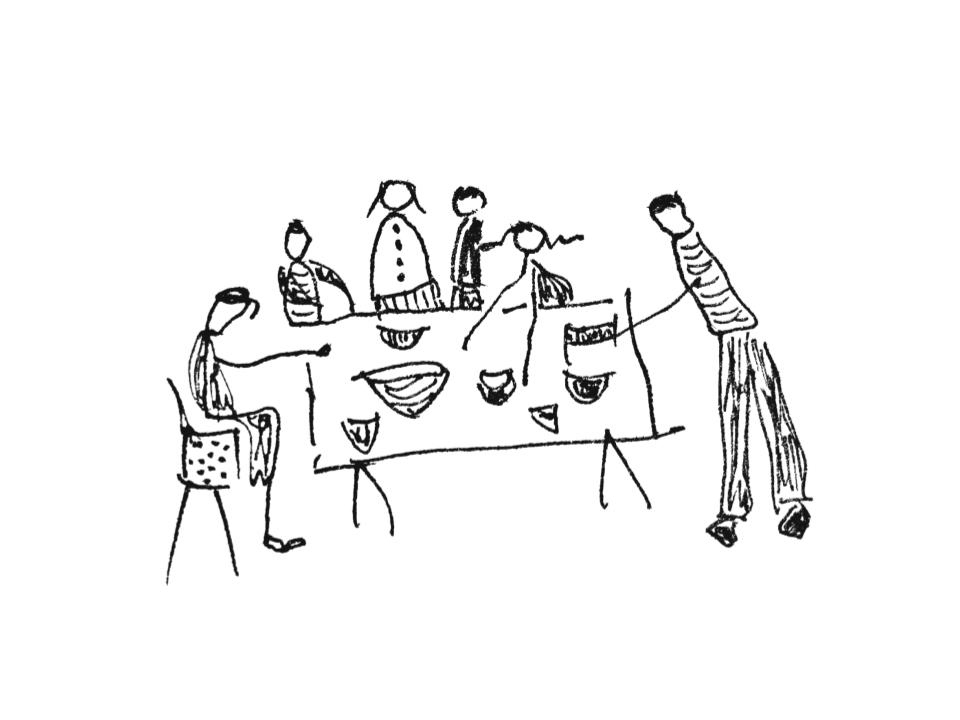
There was venison, asparagus pie, various salads, pasta dishes, and fruit on the table. Before eating, everyone sang:
“Smoothly glides the stream of life, the stream of life, free from envy, free from strife. Free from envy. Free, free from strife.”
Then everyone ate, talked about their work, and entertained the thought of going for a night swim.
If you attend a Tuesday potluck at the Free Columbia artist residency in Philmont, you might think you’ve stumbled into the pre-meal ritual of some benevolent cult. But what you’re actually witnessing is a community of artists so immersed in their work, cradled within such a tightly-knit quasi-family, that they’ve loosened their grip on the outside world. For a few months these artists — potters, painters, writers, musicians — sink utterly in their artmaking, opting out of the material world and opting into a spiritual one, a place where their lives are guided by clay, color, and community.
Free Columbia was founded by Laura Summer in 2009. Originally a painting school, the maximalist artmaking mansion on Maple Avenue has evolved into a self-guided arts residency, where up to six artists live, work, and eat together.
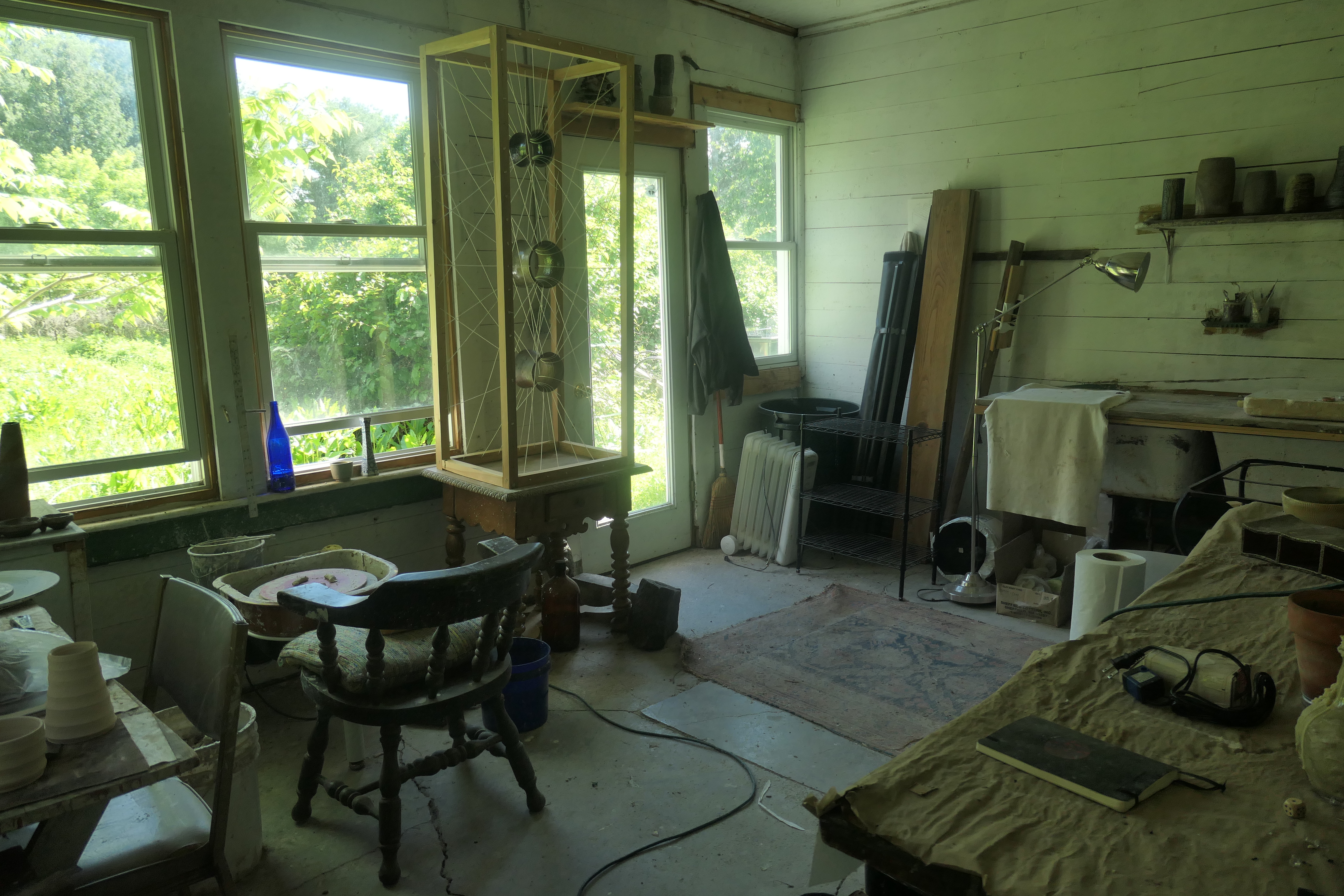
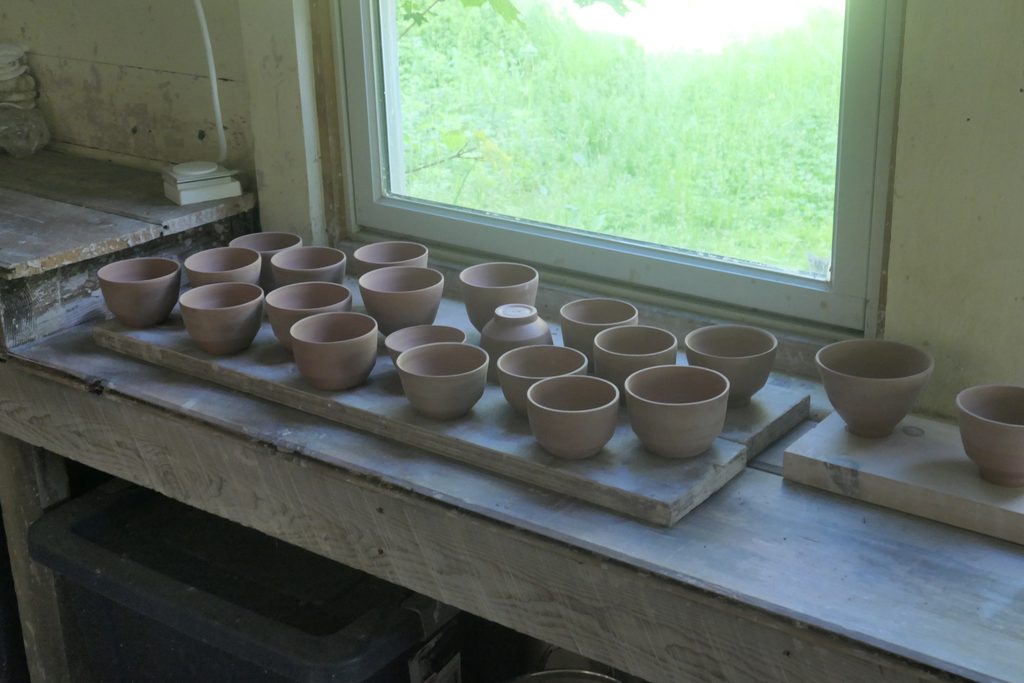
Inside the sprawling 1902 stately Victorian home, fragments of poetry are tacked to the walls, guitars drape over armchairs, paintbrushes soak in quart containers. Next door in the barn studio, the smell of clay hangs in the air as bits of pottery wait to be fired, with near-unlimited paints close by, waiting to be worked.
But Free Columbia is not just summer camp for the artistically inclined. It is more than a resume entry to advance a career in the arts, or just a way to spend a summer spent barefoot in the grass. And that’s by design.
When Summer was in fifth grade, she asked her mother what happens after you die. “Nothing,” said her mother. Unsatisfied, Summer never stopped pondering the question. She’s 71 now, and has arrived at the opposite position than her mother took. “I don’t have any doubt,” said Summer. “There is not nothing. There is something.”
Indeed, there is “something” in the air at Free Columbia. There’s “something” in the way the house is decorated, as if it were a church erected for the worship of art. There’s “something” in the air at the Tuesday potlucks, verging on a form of prayer in the shangri-la garden. There’s “something” about the residents, with one foot planted on earth, another stepping through a looking-glass into a faeryland world of art.
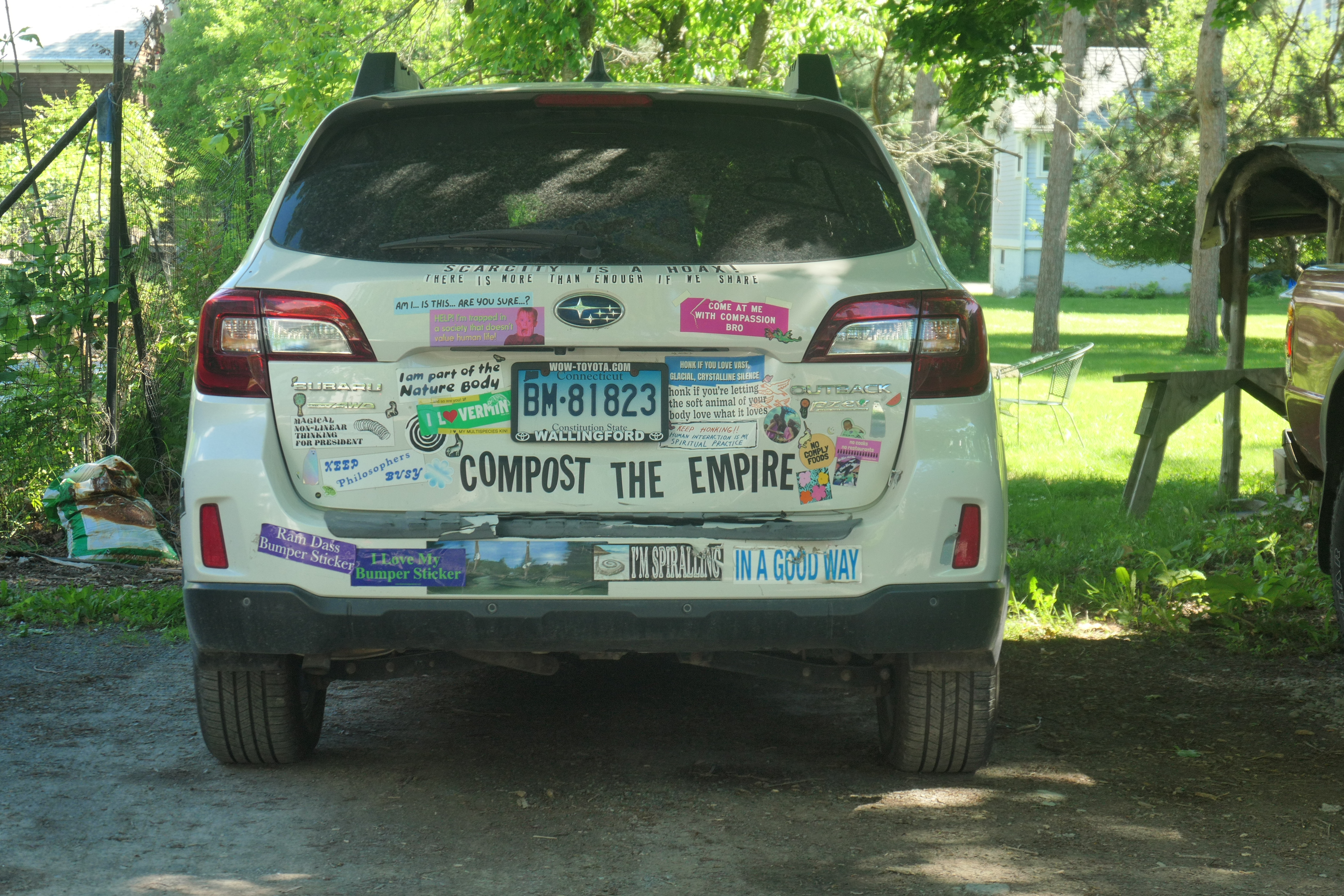
There’s something in the way they speak with one another, a directness verging on the uncomfortable, skipping over small talk and going straight for the truth, perhaps best summed up by resident Juliette Geller’s many bumper stickers: “keep honking, human interaction is my spiritual practice.”
“[Free Columbia] is dedicated to the relationship between spirit and art,” said Summer. This spirit, this “something,” is like a seventh permanent resident at Free Columbia, a god–shaped higher power that can only be communed with via art and community.
“You have to have the interest in there being something other than a material reality,” said Summer. “If you’re a confirmed materialist, that you believe human beings are a bunch of cells functioning in certain ways and when you die nothing is going to be there, then you won’t feel super comfortable [at Free Columbia].”
Free Columbia does not concern itself with the mainstream art world, turns away from a status-seeking culture, cuts ties with the worldly forces of career and capital, and instead floats untethered towards a world of art, searching for “something.”
Free Columbia’s approach to artmaking is heavily influenced by the anthroposophy teachings of Rudolf Steiner, particularly in its application of “social threefolding,” a theory developed in the 1910s that advocates for the separation of cultural and artistic life from economic drives.
That’s why everything at Free Columbia, including the cost of the residency itself, is on a sliding scale starting at zero dollars. When Free Columbia hosts an art sale, they’re not called art sales but “art dispersals.” At an art dispersal, the work is zero dollars or a million dollars — it’s up to the buyer, if they should even be called that.
One could hypothetically walk into an art dispersal, remove a painting from the wall, and take it home without a penny being exchanged (although Summer admitted that this has never in fact happened).
“The art dispersal decommodifies the art,” said Summer. “There’s a spectrum of possibilities for getting art out into the world, you can sell it, you can rent it, you can disperse it, and there’s probably a million other possibilities — we just need to find them.”
Art dispersals are no white-walled gallery experience. They’re no cocktail-sipping soiree, where deep-pocketed art collectors come to decide who they’ll make famous next. Art dispersals are a spiritual posture in opposition to a culture of consumerism and the pursuit of fame. From creation to consumption, Free Columbia upends art conventions, humbly yet radically skewering a mainstream culture that cares more about price tag than process.
In May, 2026, a cohort of residents were wrapping up their six month residencies. Naturally, their work was being dispersed. In the barn studio there were dozens of delicate pieces of pottery and watercolors.
Upstairs, you were likely to knock your head on some hanging mobile made of birdhouses, windchimes, and rusty spoons, or get caught in some bellowed hanging fabrics, the work of resident Geller, who had made an enormous, interactive fort out of repurposed childhood quilts and bedspreads.
“I don’t think it’s a residency where you come and make your individually focused art, where you try to get the most out of it for yourself,” said resident Natalia Gillespie, whose work, setup in the foyer of the main house, made you feel like you were inside a dollhouse, with delicate collages, small trinkets, and an illuminated birdhouse in the corner. “It’s a residency on how to live communally,” said Gillespie.
Resident Raena Hardison had quit her job as a copywriter to attend Free Columbia and pursue music. At the showcase, she gave a concert of immaculate fingerstyle guitar and rounded singing, with subtle vibrato and dipping and climbing melodies. She was surrounded by the paintings of Bella Toso, another resident, who met Summer at an art show in Portland, and was moved to apply.
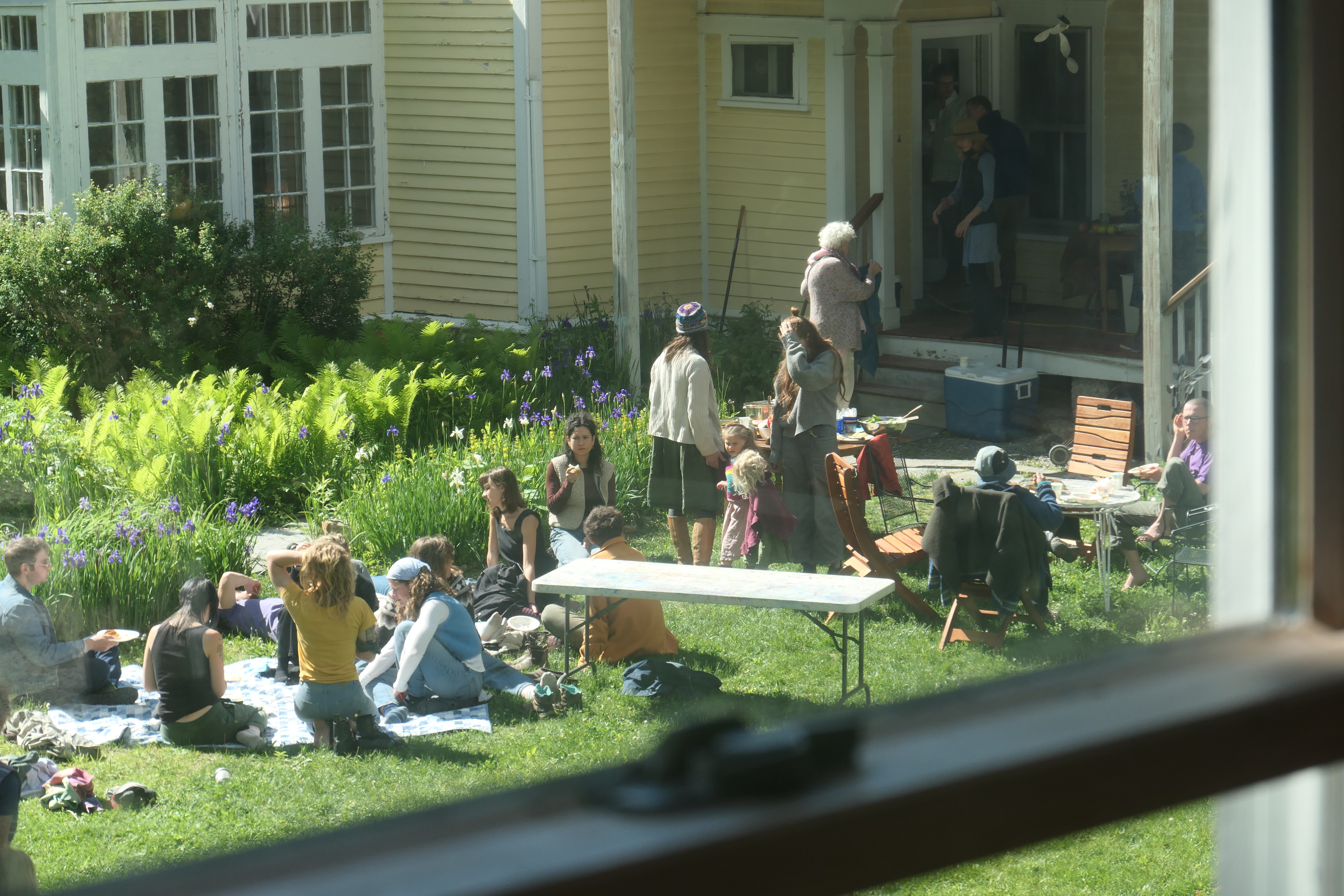
With unconventional backstories, the residents continue their unconventionality with Free Columbia. The residency is not just an artsy hotel for when the material world gets too overwhelming, it’s a place for those who are committed to a life beyond the material, grounded in a firm philosophy that places artmaking as something closer to a kind of worship than a kind of career. It posits that art exists in a realm of spirits that us mere mortals can only paw at from below. To get closer, we have to gently let go of the material world, even if that means others call you odd in print.
By attending Free Columbia, each resident has committed to a quiet rebellion against a life that runs along tracks, joining Summer in the lifelong pursuit of… “something.”